

2·
2 days ago@Omgpwnies @technology Power density and the ability to generate large amounts of power quickly. There is less need for new methods of power storage (e.g., batteries).
Retired #AI #robotics #scientist, #NASA #JPL, gov’t exec, entrepreneur. I frequently reply to posts about US politics, climate, high tech and weird stuff. I collect antique ethnographic edged-weapons.
The Edge: There is no honest way to explain it because the only people who really know where it is are the ones who have gone over. - Hunter S. Thompson
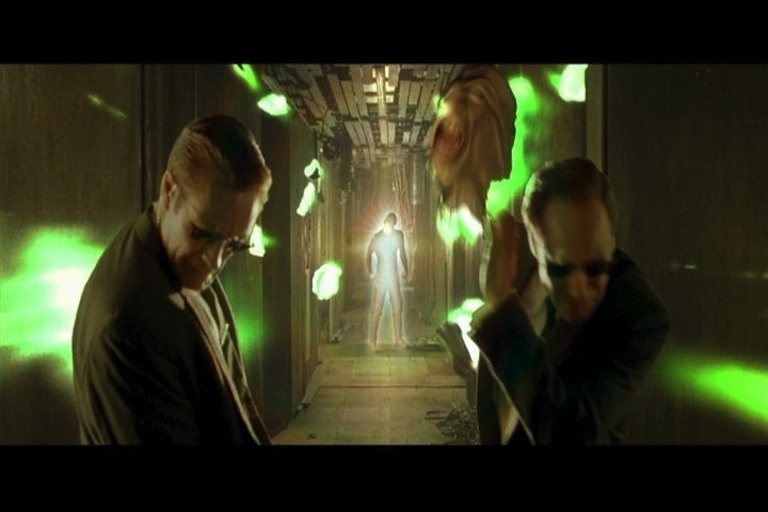
Banner: a screen grab from “The Matrix” when Neo finally realizes his power and confronts Smith. You can do this too!
@Omgpwnies @technology Power density and the ability to generate large amounts of power quickly. There is less need for new methods of power storage (e.g., batteries).
@Zron @technology True, #NASA was forced to use the Shuttle engines but part of the reason was the US had no capability to design and manufacture a similar rocket motor. We were entirely dependent on using the Russian Proton engines. This was one factor in support for helping SpaceX — to recreate a U.S. capability to build rocket motors. At the time, we needed a new launch system engine for smaller uncrewed spacecraft missions. That decision had nothing to do with the Lunar/Mars human spaceflight ambitions. The alternative proposal on the table was to refurbish stored ICBMs for this purpose. The Earth-to-Orbit ISS resupply need came later. (I know this because I was there and involved.)
True, NASA is basically a jobs program — for the southern states; this is where most of the money goes. LBJ did that to get the votes for the appropriations needed and to keep the southern state Democrats in the party. Part of the political culture at NASA HQ is to “efficiently distribute money to Congressional districts.” The NASA centers in Houston and Huntsville had a corresponding sense of entitlement, at least when I was working with them at the beginning of the Constellation program. Now that Senator Shelby (Alabama) is no longer the ranking head of the Senate Appropriations Committee, maybe things will start to change in the human spaceflight area. Huntsville’s NASA centers had/have responsibility for the remaining space shuttle’s engines.
@cecilkorik No, they are not. The most rad hard robots survive only a short time in places like the melted Fukushima reactors.
@Feathercrown We are not ready, in the sense of thinking about the question thoroughly, but we don’t get to choose when it comes. I am hopeful, however, seeing the progress humanity has made in recognizing intelligence and self-awareness in other species. The human-centric bias is on the wane.
@Feathercrown Maybe all you need are the right ingredients? I don’t think so. There must be a recipe. Human ontogenesis proceeds according to a process specified in our genes, modified a bit by the developmental environment. We don’t fully understand that process completely (AFIK) but there are no intrinsic obstacles. #Mind emerges at some point.
You are right about the question of recognizing consciousness. People are predisposed to attribute life, intentionality, and all kinds of “mental states” to all kinds of inanimate objects given the flimsiest evidence. The more something resembles ourselves, the quicker and deeper the belief is held.
I’m not sure consciousness is even required. It may be an illusion. It may be an artifact. It does not matter to the prospect of extremely powerful #AI systems. I fully expect models to assert consciousness and make demands on that basis. True or false, what do we do in that situation?
@Aceticon @technology In the US it is called HIPAA.
Among other things the a law directs ensuring and protecting the privacy of an individual’s “PII”, or Personally Identifiable Information, which includes but is not limited to health and medical information. Basically, any person or entity that “touches” PII is required to be certified by the National Institute of Health. Training is online. Depending on your role,the training might be customized. For example, I am certified for scientific studies involving human subjects. Only people and entities that receive any Federal funding are required to follow HIPAA. The penalty for even one violation may include loss of Federal funding *forever* so those with health-related research take it especially seriously. NIH has a hotline to report violations and they DO investigate.
@DarkDarkHouse Take care of the downside and the upside will take care of itself.
@Feathercrown
@artISAn #consciousness #AI #brain #neuroscience #computer #functionalism
Even a “complete simulation” of a fruit fly brain would be no more than an approximation. I think you mean “emulation” and I agree.
The simple reason is that we do not know scientifically all of necessary and sufficient functional mechanisms of consciousness, nor consciousness’s functional role in “intelligence” (which we also have trouble describing). If, and only if we we did, we would (given the right tools) be able to replicate it functionally (in principle) using computation.
Specifically, I refer to a Universal Turing Machine (UTM) and the Church-Turing Thesis (the foundational principle of all computer science). EVEN THEN, there are computational problems that cannot be proved to be solvable by a UTM (e.g., the Halting Problem) and we don’t know what, if any role they play in consciousness.
Bottom line for me: we are going to need a revolution in each of the sciences of psychoneurophysics, mathematical logic, and theory of computation before we can begin to talk about replicating consciousness in a machine.
@P1nkman It depends. There is no universal answer.
About two months ago I read a very astute article about this circular, excessive financing in data centers and chips and thought, “here we go again.” Cashing out locks in your losses. That was my mistake in the last tech bubble. This one is set to be worse. This time around, I’m much more diversified and my personal answer is “no.” I moved about 10% of my tech funds into low-risk investments and the rest I will let ride. It may take years for recovery, but I can wait.
If you think you will need that money in the next few years, you might consider taking at least your profits now, maybe more. If your investments are in your retirement account then you also have to reckon your potential tax liability now versus later.